
Decision management (DM) has long been good at the deliberate part of a decision: explicit logic against mostly structured data that people can read, test and govern. Where there has always been an opportunity is leveraging unstructured data to enhance these automated decisions. A new kind of AI model, the System One model, goes after exactly that. TypeSafe coined the term and shipped Jev, and OpenAI’s announcement of Decisions API at DevDay ’26 has helped create a new category of AI models, System One models, that complements the usual DM approach for automated decisions. In this post, I explain what System One models are, how they differ from generative AI, where they fit in DM, and how to best leverage them within your decision services.
What Are System One Models?
A System One model is, in essence, an AI model that decides. It reads messy, unstructured input such as a ticket, a log entry or an email and returns answers from a predefined set, each with a probability that indicates how confident the model is.
A simple example makes this concrete. Suppose an insurer’s claim system uses a System One model designed to answer three questions, each with a fixed set of allowed answers:
- What is the claim type? water damage, fire, theft, liability, other
- What is the urgency? low, medium, high
- Does it involve a third party? no, yes
Now the claim system receives this note:
“Water has been coming through the kitchen ceiling since last night. Upstairs neighbor says a pipe burst. Floor soaked. No one hurt.”
The System One model processes the note and returns:
- claim_type = water damage, probability 0.93
- urgency = high, probability 0.88
- third_party = yes, probability 0.74
Notice what the model does not do. It doesn’t write prose about the claim, and it doesn’t provide an opinion on what should happen next. Instead, it hands back structured answers that a decision can use. (We’ll pick this claim back up when we look at how System One models work with DM.)
A fair question at this point: isn’t this just what generative AI already does?
System One Models vs Generative AI
For the last three years, the AI race has been about writing: more human-like answers, deeper reasoning, better code. The large language models (LLMs) that power generative AI (GenAI) are built, benchmarked and marketed on how well they produce text. Levering them for actual automated decisions has received less attention.
As I said on the “Ask an Expert” panel at DecisionCAMP ’25, LLMs model language, not reality. However, they’re so good at convincing you otherwise that it’s easy to forget. From a DM perspective, that makes GenAI a poor fit for making operational decisions, and the reasons are structural:
- Free-form, inconsistent output: The same input can produce different answers from one run to the next, and the answer comes back as prose that the decision then has to interpret.
- Confidence you cannot rely on: LLMs sound certain even when they are wrong, and the confidence they express is not a measured probability.
- Latency and cost: Generating text token by token is slow and expensive, which matters when a decision runs thousands of times a day. It is one reason I do not expect organizations to rely on GenAI for straight-through processing.
System One Models are Closer to Traditional ML Models
System One models take a different path. They are much closer to the traditional, well-established machine learning (ML) models that DM already uses regularly – akin to zero-shot text classification models:
- Bounded output: Humans predefine answers, so a decision never has to guess what the model meant.
- Calibrated confidence: Probabilities indicate how likely an answer is correct, rather than how likely the next token follows the previous ones. This means you can set a separate threshold for each question, scaled to the cost of being wrong. For example, Jev is trained with what TypeSafe calls “reinforcement learning for calibrated decisions.”
- Speed and efficiency: Classifying is much faster than writing.
That does not make a System One model infallible, and it does not make it a replacement for GenAI either. They do different jobs. But fast, bounded and calibrated raises a bigger question: what kind of contributions to decision-making is this model actually providing, and when should we trust it? The name gives us a clue.
Why They’re Called System One: Modeling Intuition
The name comes from Daniel Kahneman, the Nobel-winning psychologist who described cognition as two systems in Thinking, Fast and Slow (2011):
- System 1 is fast, automatic, effortless and associative.
- System 2 is slow, controlled and rule-governed.
System 1 is where judgment starts. It is the intuition or gut instinct we rely on to survive, and it inspired not only the name of these models but also their purpose. Intuition is powerful, but anyone who has been burned by a gut feeling knows it is not always right. So when can you trust it?
When Intuition Can Be Trusted
System 1 thinking keeps us alive, but it doesn’t necessarily make us thrive. That is why System 2 acts as a monitor that endorses or overrides it.
In “Conditions for Intuitive Expertise: A Failure to Disagree” (American Psychologist, 2009), Kahneman and Gary Klein concluded that intuitive judgment is trustworthy when two conditions are in place:
- A valid environment: a situation where stable, learnable patterns link cues to outcomes
- An opportunity to learn those patterns: the judge has already absorbed them over time through extensive practice with fast, unambiguous feedback
Kahneman and Klein also warn that confidence is not a reliable sign of accuracy. A confident judge in an unpredictable environment is simply confidently wrong. This aligns with what I said about LLMs at DecisionCAMP ’25. System One models have calibrated confidence, but like LLMs, they can still be overconfident.
When System One Models Can Be Trusted
Applying Kahneman and Klein’s work to enterprise decisions gives us practical guidelines for when a System One model deserves our trust:
| Takeaways from Kahneman and Klein | Implications for a System One Model |
|---|---|
| Trustworthy intuition requires a valid environment. | Use it only where cues reliably predict outcomes. Category, urgency, intent, and document type are good examples. |
| Trustworthy intuition requires an opportunity to learn. | A feedback loop with labeled outcome data is necessary to validate the model. |
| Confidence is not the same as accuracy. | Calibration must be verified on your own data. Then set thresholds per action, by the cost of error. |
In other words, a System One model is safe to automate when it meets the conditions for trustworthy intuitive judgment and there is a mechanism for System 2 thinking to override its decisions. That mechanism is exactly where DM comes in.
Decision Management: System Two Oversight
DM is a discipline that treats repeatable, operational decisions as assets that you can model, automate, measure and improve. Its fundamental approach is to pull decision logic out of application code and into a decision management system, where the business people responsible for the decision outcomes manage it.
Decision management systems like Sparkling Logic SMARTS™ combine:
- Explicit Decision Logic: This is the part of a decision that people write down on purpose, expressed in business-readable constructs such as flows, tables and rules instead of being buried in application code. SMARTS™ lets analysts model decisions and author logic through decision flows, rules, tables, trees, graphs, scorecards and lookup models, using graphical representations and agentic AI.
- Predictive Models: By learning patterns from historical data, predictive models produce derived information, such as a score, that is used to inform a decision. SMARTS™ can induce rules and models from data (BluePen) and import and operationalize Python, ONNX and PMML models.
- Quality Measurement: This means putting numbers on how efficient, fair and explainable a decision is, both on historical cases before release and on live outcomes after. SMARTS™ puts historical data at the center of authoring and uses decision analytics, including real-time analytics on deployed decisions, to measure and track outcomes.
- Testing & Experimentation: Decisions should be tested before they run and challenged after, by comparing alternatives and optimizing for your objectives. SMARTS™ supports simulations, champion/challenger experiments, and shadow deployments.
- Security & Governance: Changes to business-critical decisions have to be controlled and traceable. SMARTS™ provides versioning, release management (including cloud and on-premise deployment), access control, and workflows for repeatable decision management tasks.
Decision Management Provides Accountability
The result is accountable decision-making: every decision is governed, tested against real data, measured in production, and used to improve the next release. In Kahneman’s terms, DM is an industrialized System 2 – slow, deliberate, rule-governed thinking, made fast enough to run thousands of times a second. (I’ll come back to Kahneman shortly.) The point for now is that DM is strong at deliberate judgment.
How System One Models and Decision Management Can Work Together
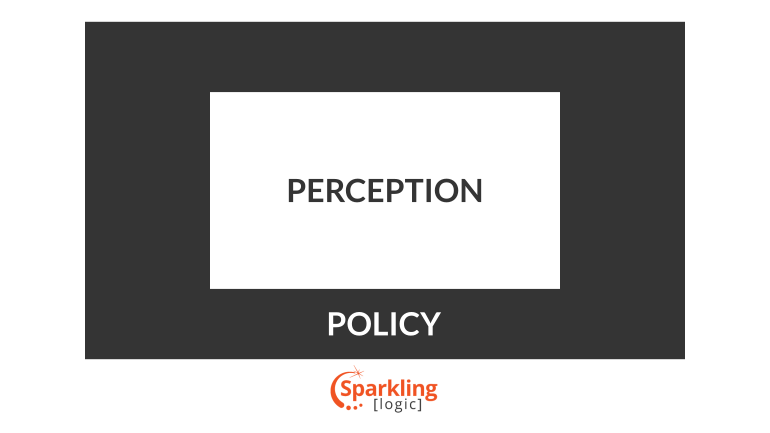
DM is well suited to be the System 2 mechanism that System One models need, because it already plays that role with the decisions that power automated risk, credit, product configuration, and many other operational decisions in many organizations. Rather than relying on the model to decide, organizations can use it to perceive what messy input is saying (water damage, probability 0.93) while DM decides what to do about it (send an adjuster to assess the damage). System One models handle perception; DM handles policy.
Let’s go back to the claim. The decision receives the three answers and applies rules written by the business, with a separate threshold for each question. For illustration, say the rules dispatch an adjuster when the claim type is water damage at 0.90 or higher and the urgency is high at 0.85 or higher. Both answers clear the bar, so the adjuster goes out. The third-party answer, at 0.74, falls below a 0.80 threshold, so the rules flag the claim for a claims handler to confirm whether another party is involved. None of this logic lives in the model. It lives in the decision, where analysts can read it, test it against historical claims, and change it tomorrow.
The Right Architecture
Sparkling Logic SMARTS™ already has the architecture to run this loop with System One models and produce trustworthy decisions. In our claim example, the System One model plugs in as a predictive model, and explicit decision logic applies the thresholds and routing rules. Quality measurement tracks calibration and live outcomes, while testing and experimentation let you replay past claims and ramp up through champion/challenger. Security and governance control who can change the thresholds and when to release a new version. Its decisioning agents bring the runtime pieces together:
- Machine learning models that classify and predict – the slot a System One model fills
- A business rules engine that provides compliance safeguards
- Real-time monitoring for human oversight and drift

Three Roles for AI in Decision Management
Where does a System One model sit among all the ways AI can show up in DM? My colleague and co-founder Carole-Ann Berlioz offered a useful framing at DecisionCAMP ’26, where she talked about AI’s evolving role from decision assistant to AI as decision architect.
AI as decision assistant, like Sparkling Logic’s AI Assistant, helps business analysts navigate the decision management system, draft, validate and explain decision logic, and complete other tasks during development. Errors are contained and can be caught during testing.
AI as decision architect is different. Carole-Ann argued that it is not just a feature upgrade but a change in risk category. When AI is given the authority to author the whole decision model and resolve any conflicts, errors become systemic and difficult to uncover. In addition, when AI applies statistically typical assumptions to incomplete requirements, the result may be correct but lack the proprietary rules that gave an organization its competitive edge.
Predictive ML models and System One models do not solve the challenges of the decision architect role, but they do point to a third role for AI in DM: the runtime counselor. Used as designed, they advise a decision while humans stay in control of it. The table compares the three roles:
| AI Role | When It Acts | What It Does | Risk Profile |
|---|---|---|---|
| Decision Assistant | Design Time | Drafts rules, explains logic, and generates tests that are reviewed by humans | Contained: errors are local and testing catches them |
| Decision Architect | Design Time | Authors the whole decision model and resolves conflicts itself | Systemic: errors are emergent across hundreds of rules and hard to explain |
| Runtime Counselor | Execution Time | Provides additional context to guide a human-designed decision | Bounded: errors are limited by the answer schema, per-action thresholds and the rules around it |
Three Wise Counselors
If runtime counselor is the role, the next question is which counselor to call. In situations where humans cannot write the rules themselves, organizations now have three approaches:
| Approach | Mine Rules | Create Predictive Model | Use System One Model |
|---|---|---|---|
| What runs in production | Readable rules learned from data and experts | A model evaluated as part of the decision | A model evaluated as part of the decision |
| Best input | Structured historical records | Typically, numeric structured data | Unstructured text: notes, tickets, emails |
| Explanation | Rule by rule, reviewable before deployment | Answer with relevant statistical information, potentially reason codes | A probability per answer; the reason is not a trace |
| How it changes | When an analyst edits or re-mines the rules | Re-training on new data or adaptive re-training | When the model version changes |
There is overlap, so the right approach depends on the situation. Mined rules suit structured, regulated decisions where every outcome must be defensible. Predictive models add context from structured data, and System One models add context from unstructured data. They are not mutually exclusive – all three can be used in the same decision.
In SMARTS™, BluePen can mine rules and create predictive models, and it can also compute fairness and explainability metrics such as disparate impact and SHAP to help ensure defensibility. Defensibility is also the reason some parts of a decision should never be handed to a model, no matter how good it gets.
What Must Stay Explicit
Whatever approach an organization takes, some parts of a decision should stay explicit, no matter how fast or cheap models become:
- Authorization and permissions. For example, whether an account exists, who may approve, whether consent is recorded.
- Regulatory logic. A set of rules or a decision table does exactly what someone wrote down, can be shown to a regulator line by line, and changes only when a person edits it. Adverse-action reasons in lending, and eligibility and pricing rules under rate filings, belong here.
- Irreversible actions. Payments, cancellations and production changes need explicit gates, whatever the model’s confidence is.
- The organization’s differentiating judgment. Carole-Ann’s point applies at run time too. The non-obvious rules that make a firm’s decisions its own should be written down and owned, not left implicit in a general model.
A Practical Guide to Implementing System One Models
With the boundaries drawn, here is how I would get started. For organizations already using a decision management system, adopting a System One model is not much different from adding a new strategy to an existing decision:
- Pick a decision that meets Kahneman and Klein’s conditions for trustworthiness: high volume, a stable link between cues and outcomes, and outcome data you can label.
- Model the perception, not the policy: The model should only handle “What is this?” while the business rules handle “What do we do about this?”
- Decide, but don’t act right away: Run the new strategy (System One model plus business rules) in shadow alongside your existing strategy so you can compare results on real cases.
- Check calibration on your data: Confirm that stated probabilities match observed accuracy before setting any thresholds.
- Automate cautiously: Enable only low-risk, reversible branches with per-action thresholds. For example, set up a champion/challenger experiment so only 10% of decisions go through the new strategy for 7 days, add a human review step to validate those decisions, and ramp up slowly.
- Keep monitoring to determine when to reevaluate: Watch for rising correction rates, model drift and policy updates. Significant changes should trigger recalibration.
How System One Models Will Impact Decision Management
The bottom line: System One models do not and will not replace decision management. They supply the fast perception on unstructured data that DM has been missing, and DM supplies the governed policy that makes those judgments safe to act on. Together, they can automate decisions you can trust. My advice is to start small: pick one decision, give the model one perception task, run it in shadow, and let your own data tell you what to do next.