
SMARTS™ AI & MODELOPS
Incorporate predictive analytics into decisions
- Operationalize data science models
- Create fair and explainable models to complement data science ones
- Manage model and decision lifecycle in one place

See SMARTS™ AI & ModelOps in Action
OPERATIONALIZE DATA SCIENCE MODELS
Integrate machine learning through various approaches
- Import Python models
- Import models developed in external platforms (ex. SAS, SPSS, R) in ONNX and PMML formats
- Invoke models operationalized outside of SMARTS™ (external services)

Importing a Python model
CREATE FAIR AND EXPLAINABLE MODELS TO COMPLEMENT DATA SCIENCE ONES
Combine data insight and expert knowledge with BluePen
- Explore data statistics and correlations
- Select data attributes and modeling technique (ex. forest, neural network) to generate a model
- Alternatively, interactively build a decision tree from scratch
- Calculate fairness and explainability metrics using industry standard techniques (ex. SHAP, disparate impact)

Exploring Statistics and Correlations with BluePen

Interactively Building a Decision Tree with BluePen

Selecting Techniques for Checking Fairness

Selecting Explainability Method
MANAGE MODEL AND DECISION LIFECYCLE IN ONE PLACE
Test, deploy, and monitor models directly in SMARTS™
- Conduct simulations and champion/challenger experiments to test different models
- View status of Python models in Lifecycle Management UI
- Monitor model performance in real-time and create alerts for model drift
- Automate model retraining and replacement

Viewing Python virtual environments in Lifecycle Management UI
Your Next Step
FEATURED BLOG POSTS
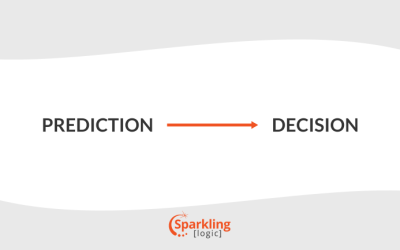
Prediction Is Not a Decision: Why Decision Management Matters in the Age of AI
There is a common misconception: a prediction is not a decision. What does that mean? It is actually pretty simple. A model can tell you a customer has an 82% chance of defaulting. It cannot tell you whether to approve the loan, decline it, or ask for more documents....
How to Put System One Models to Work with Decision Management
Decision management (DM) has long been good at the deliberate part of a decision: explicit logic against mostly structured data that people can read, test and govern. Where there has always been an opportunity is leveraging unstructured data to enhance these automated...
Should AI be Your Decision Architect?
Recently at DecisionCAMP 2026, our CPO Carole-Ann Berlioz delivered a pointed warning to the decision management community. The shift from AI as Decision Assistant to Decision Architect isn't a feature upgrade. It's a change in risk category. In this post, we'll cover...